Dime · 1975
1975 Dime Value
A 1975 dime is worth $0.10 to $0.98 in circulated condition, depending on its mint mark and wear. The record price at auction is $36 (Great Collections, 2013).
Prices updated:
About the 1975 dime
The 1975 dime is a regular circulation issue, struck in copper-nickel clad copper (91.67% copper, 8.33% nickel), weighing 2.268 g, 17.91 mm across, from a design by John R. Sinnock. It was struck at Philadelphia, Denver — 899,379,200 coins in all, which is why an ordinary example is worth close to face value however well it has been kept.
Denver made the fewest at 313,705,300, against 585,673,900 from Philadelphia. The mints are within the same order of magnitude, so on this date the mint mark does far less to the price than condition does.
The spread on this date is almost entirely about condition. A worn example is $0.10; the same coin certified PR68 carries a guide value of $575,000, and PCGS has graded 1 that high. Everything between those two numbers is a question of how the coin was handled in its first weeks.
Legends on this design — obverse: “LIBERTY · IN GOD WE TRUST”. Reverse: “E • PLURIBUS • UNUM · UNITED STATES OF AMERICA · ONE DIME”.
Population figures put that in perspective. Across the grades listed here PCGS has certified 1,081 examples of this date, and only 1 of them reached PR68. A coin that spent years in a till will not be among them; one pulled from a roll and never touched might be. That gap is the whole reason two coins with the same date sell for very different money.
There is also a record of what people actually paid. The highest recorded sale for this date is $36, at Great Collections in August 2013. Auction results move around the guide values rather than matching them — the same coin can bring more on a day two determined bidders want it, and less when nobody does.
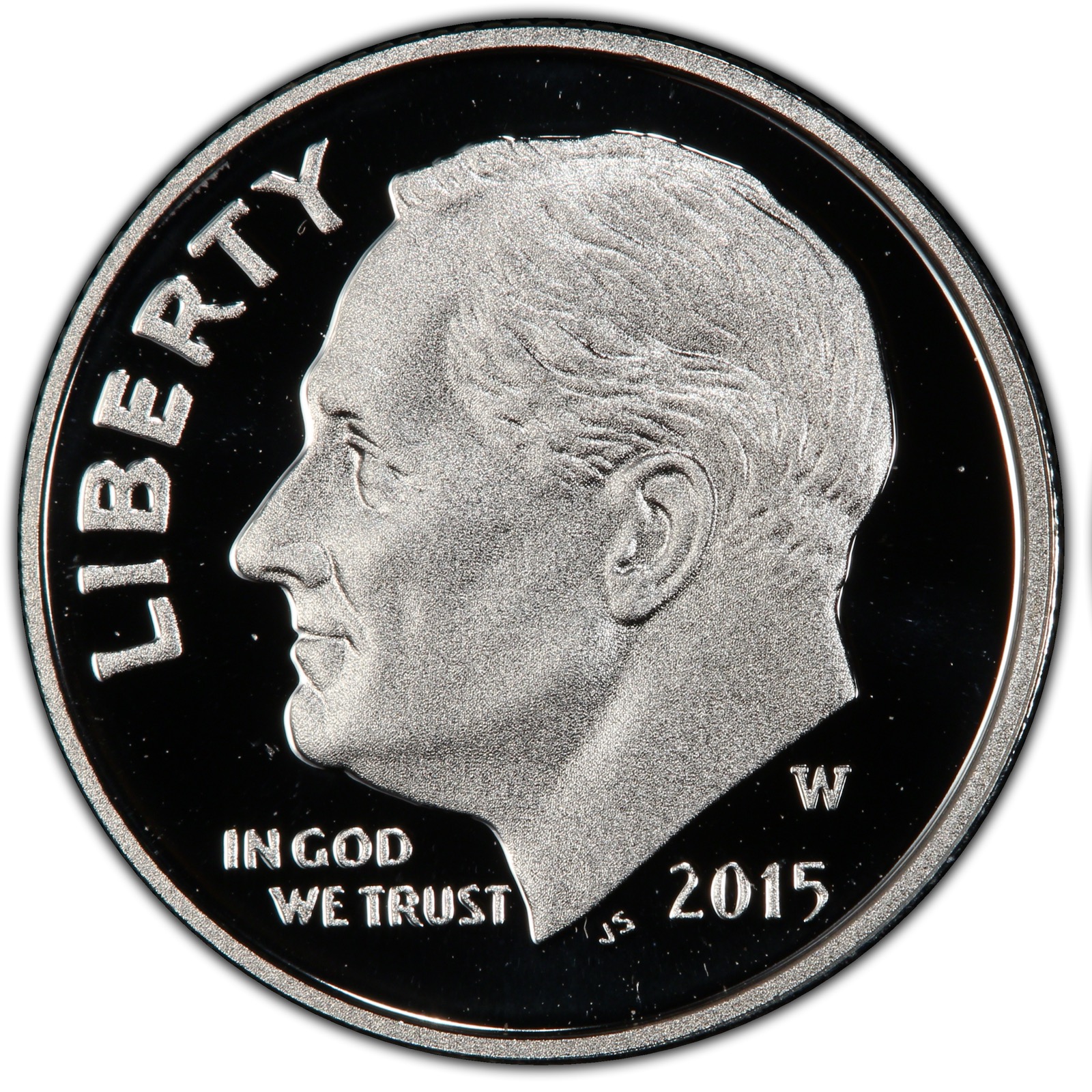
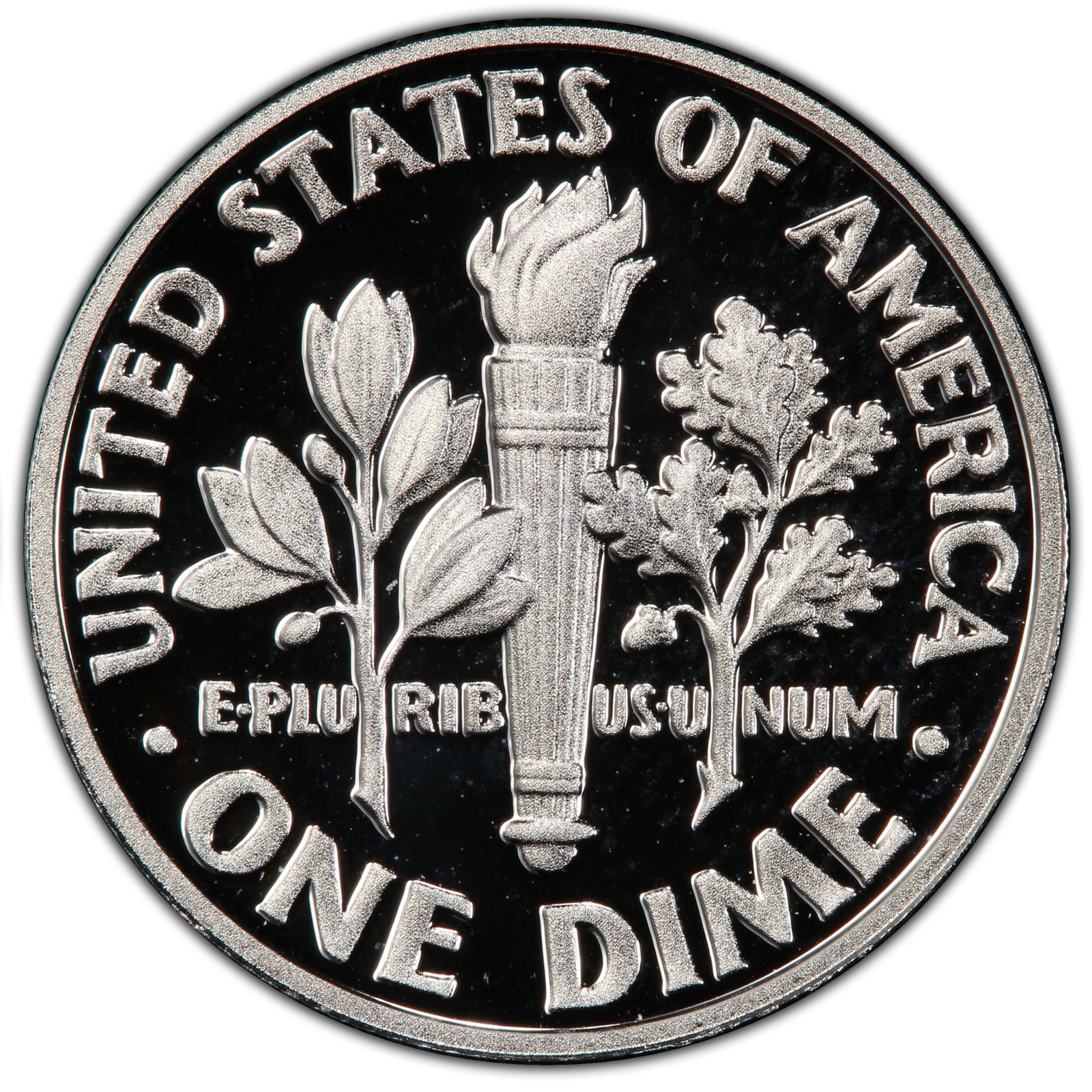
Value chart by grade
| Mint mark | Mintage | G | VG | F | VF | XF | AU | UNC |
|---|---|---|---|---|---|---|---|---|
| No mint mark | 585,673,900585.7M | $0.10 | $0.10 | $0.12 | $0.17 | $0.24 | $0.29 | $0.98 |
| D | 313,705,300313.7M | $0.12 | $0.12 | $0.12 | $0.12 | $0.20 | $0.20 | $0.98 |
What the grades mean
Grades run G to UNC, then MS60–MS70, where most value sits. How coin grading works →
Uncirculated values (MS grades)
Most value lives above UNC — population shows the rarity.
No mint mark PCGS #5147
| Grade | Value | Graded in this grade | Finer |
|---|---|---|---|
| MS60 | $4 | 0 | 468 |
| MS63 | $5 | 38 | 416 |
| MS64 | $10 | 145 | 271 |
| MS65 | $25 | 161 | 110 |
| MS66 | $55 | 94 | 16 |
| MS67 | $200 | 16 | 0 |
Mint mark D PCGS #5148
| Grade | Value | Graded in this grade | Finer |
|---|---|---|---|
| MS60 | $4 | 0 | 565 |
| MS63 | $5 | 2 | 561 |
| MS64 | $6 | 41 | 520 |
| MS65 | $7 | 203 | 317 |
| MS66 | $15 | 230 | 87 |
| MS67 | $40 | 81 | 1 |
How to identify your 1975 dime
What if it has already been cleaned?
Still identifies the same — you lose the premium. Don't try to fix it.
Where is the mint mark
It sits on the reverse near the base of the wreath before 1965, and on the obverse above the date from 1968. No letter means Philadelphia — normal, not rare. What the letter means →
Proof and collector versions
Alongside the coins made for circulation, the Mint sold 2 collector versions of the 1975 1975 dime — proofs and special finishes struck at San Francisco and sold directly in sets. These never entered circulation, so if your coin came out of a till or a jar it is not one of them. They carry an S mint mark and a mirror or satin finish that is obvious next to an ordinary coin. The scarcest was struck in 2,845,450.
| Format | Mint | Mintage | Value |
|---|---|---|---|
| Proof | S | 2,845,4502.8M | $1.64 |
| San Francisco without mintmark; Proof; only 2 known to exist. | P | —— | — |
Auction records
Real sales, not estimates. An auction result is one coin on one day, so individual prices land on both sides of the guide values above; the figures exclude the buyer's premium.| Date | Coin | Auction house | Price |
|---|---|---|---|
| Aug 2013 | D | Great Collections | $36 |
| May 2009 | No mint mark | Heritage Auctions | $35 |
What to do with your 1975 dime
Don't clean it
Leave the surface alone — see the warning above.
Is it worth grading?
Grading costs roughly $50–100 per coin. For this coin it can pay off in high grades — MS67 examples are valued at $200, and the top of the scale runs to $200. Grading is worth considering only if the coin has no wear and full original lustre.
Where to sell
Dealer: fastest, pays least. Auction: best for coins worth $100+. eBay: most buyers, most fees.
Specifications
1 Dime "Roosevelt Dime"
- Composition
- Copper-nickel clad copper (91.67% Copper, 8.33% Nickel)
- Weight
- 2.268 g
- Diameter
- 17.91 mm
- Thickness
- 1.35 mm
- Edge
- Reeded (118 reeds)
- Designer
- John R. Sinnock
- Mints
- United States Mint of Philadelphia, United States Mint of Denver, United States Mint of San Francisco (collector issues only)
FAQ
How much is a 1975 dime worth?
A circulated 1975 dime is worth $0.10 to $0.98 depending on condition and mint mark. In top uncirculated grades it goes much higher — the PCGS guide reaches $575,000 in PR68.
How many 1975 dimes were made?
About 899,379,200 in total — Philadelphia 585,673,900, Denver 313,705,300. That is a large mintage, which is why circulated examples stay inexpensive.
Where is the mint mark on a 1975 dime?
See “Where is the mint mark” above.
Are there rare 1975 dime varieties?
No major varieties are catalogued for this date. That does not rule out minting errors on individual coins — off-centre strikes, clipped planchets and doubled dies turn up in any year — but there is no known variety that makes the date itself scarce. With 899,379,200 struck, a variety would need to be genuinely rare to stand out from a run this size.
What is the S dime from 1975?
An S mint mark on a 1975 dime means a collector coin from San Francisco — 2 proof and special-finish versions were sold in sets rather than released into circulation. The scarcest was struck in 2,845,450. They are not found in change.
Should I get my 1975 dime graded?
Grading costs roughly $50–100 per coin. For this date it can pay off at the very top of the scale, where the guide reaches $575,000, but only for a coin with no wear and full lustre.